
The Delicious, Disputed, Deeply Beloved History of Gallo Pinto
A Dish That Refuses to Have a Simple Origin
Most national dishes have a tidy origin story — a specific invention, a named creator, a date that can be commemorated. Gallo pinto refuses all of this. Its history is not a single narrative but a braided one, running through multiple continents, several centuries, and a geographic argument that shows no signs of resolution.
What we can say with confidence is this: gallo pinto as it is eaten today is the product of a particular moment in Costa Rican culinary history — the late 19th and early 20th centuries — when the ingredients, techniques, and flavors that had been arriving and evolving across centuries of colonial and post-colonial life in Central America converged into something recognizably itself. The rice and the beans came from different places. The technique of cooking them together came from somewhere else entirely. And the condiment that made it Costa Rican — rather than simply Central American — arrived from a factory in San José in 1920 and has never left.
To understand gallo pinto, you have to follow each of these threads back to where they began.
Thread One: Rice
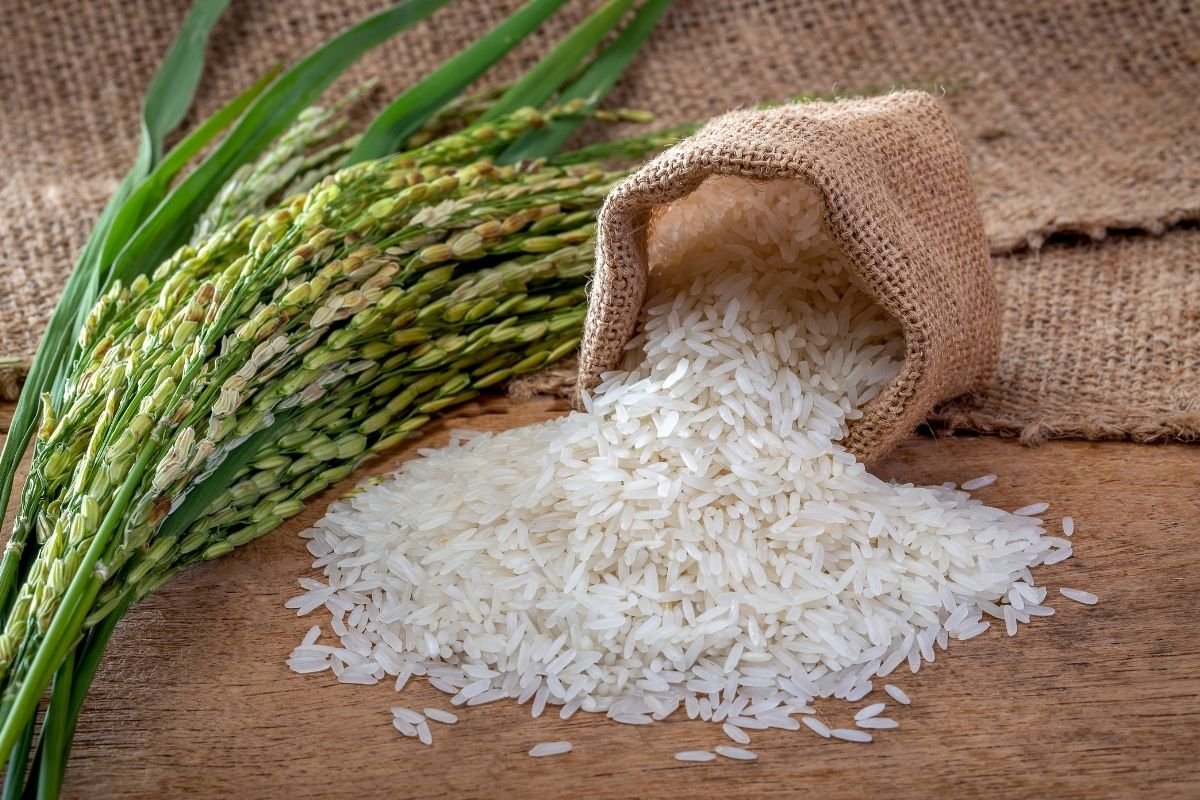
Rice is not native to the Americas. Oryza sativa — the species of rice cultivated throughout the world — originated in China, where it has been domesticated for at least 7,000 years. It arrived in the Americas through two distinct colonial pathways, and both matter for the gallo pinto story.
Spanish colonizers introduced Asian rice varieties to the Caribbean and to Central America in the 16th century, primarily as a provisioning crop for colonial settlements. But the rice that became central to Caribbean and Central American cooking — the long-grain varieties that cook fluffy and separate, ideal for mixing with beans — was largely introduced through a different route: the African slave trade.
West African foodways were built around rice in ways that European cooking was not. The rice-growing regions of West Africa — the area stretching from present-day Senegal to Sierra Leone, known in the historical scholarship as the “Rice Coast” — had developed sophisticated rice cultivation and cooking traditions over thousands of years. The enslaved Africans transported to the Caribbean and the Pacific coast of Central America brought that knowledge with them, and it shaped the food culture of the region in ways that persist today.
The rice in your gallo pinto — the clean, separately cooked long-grain white rice that forms one half of the dish — carries this history. It is not accidental that rice-and-bean combinations appear throughout the African diaspora, from the Gullah “red rice and peas” of coastal South Carolina to the “rice and peas” of Jamaica to the gallo pinto of Costa Rica and Nicaragua. They are the same culinary insight, expressed in different places by people who shared a common origin and adapted the foods available to them with extraordinary creativity.
Thread Two: Black Beans
Beans are a different story entirely. While rice came to the Americas from elsewhere, beans — specifically the common bean, Phaseolus vulgaris — are a gift from the Americas to the rest of the world.
The common bean was domesticated in Mesoamerica and the Andes thousands of years before European contact — the same region where maize, squash, and chile were also domesticated, forming the “Three Sisters” agricultural complex that sustained the great pre-Columbian civilizations of the Americas. Beans were not a colonial introduction to Central America. They were already there, already central to the food culture of indigenous communities across the region, when the Spanish arrived.
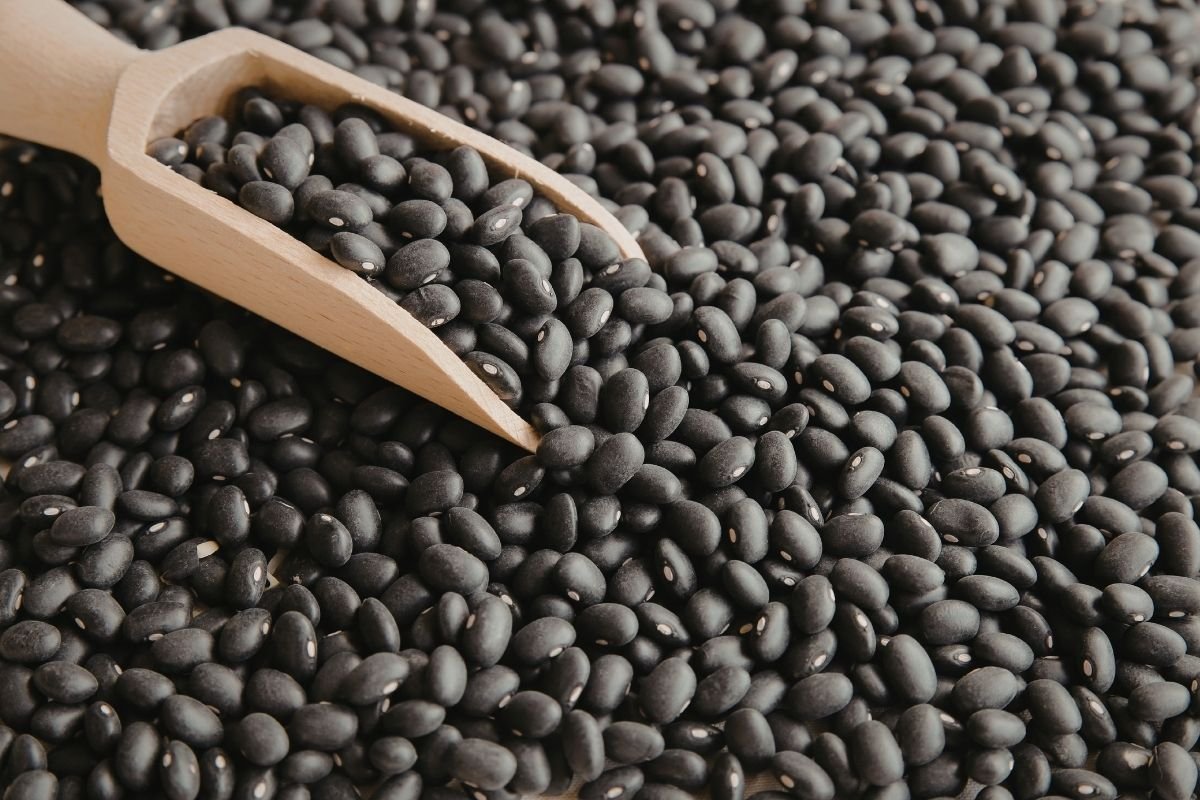
Black beans — frijoles negros — became the dominant bean variety of the Pacific coast of Costa Rica and Nicaragua for reasons of climate, soil, and agricultural tradition that favored them over the red and pinto bean varieties more common in other parts of Central America. They are earthier, slightly denser, and more complexly flavored than lighter varieties — characteristics that become significant when you are cooking them with rice and aromatics over an extended period.
The beans in your gallo pinto have been growing in Costa Rican soil for longer than there has been a Costa Rica. They are the oldest ingredient in the dish.
Thread Three: Cooking Them Together
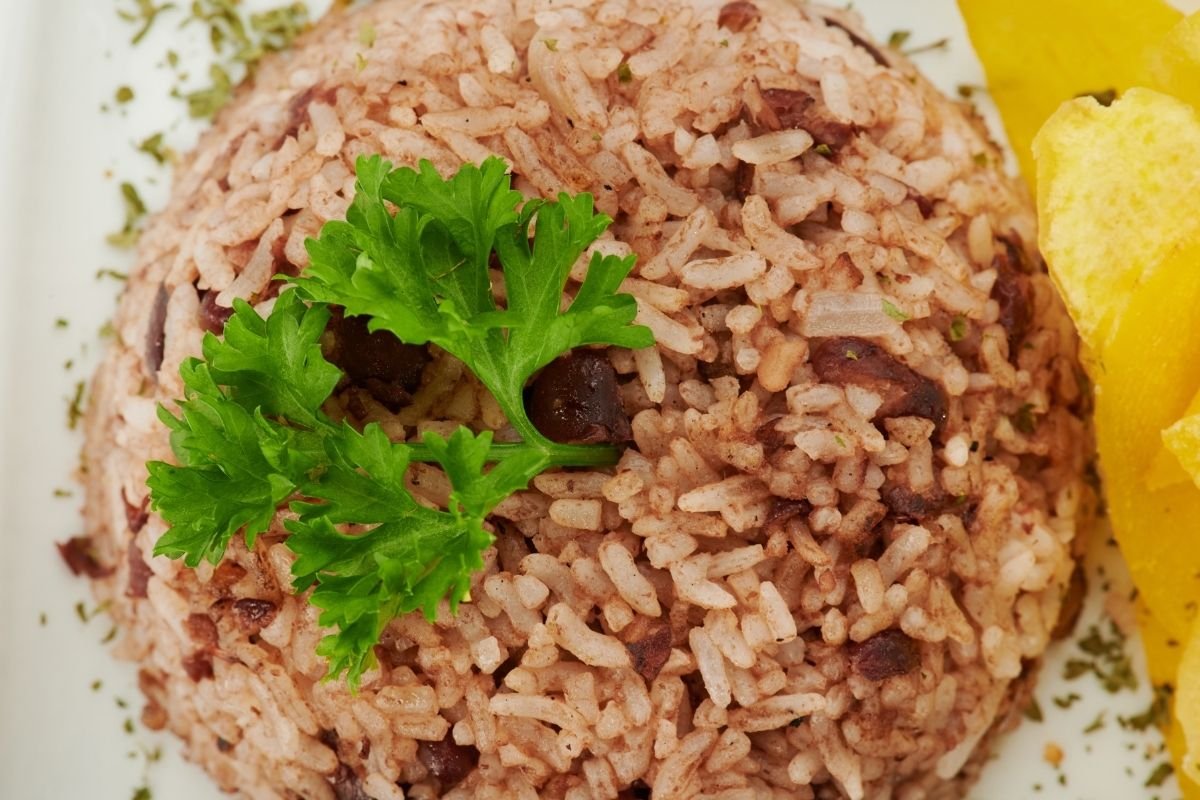
Rice and beans as separate side dishes appear across virtually every food culture in the tropical world that has access to both. Cooking them together — allowing each to absorb the flavor of the other, creating a unified dish rather than two components on a plate — is the technique that transforms ingredients into cuisine.
This technique is, again, most plausibly traced to West African cooking traditions brought to the Americas through the slave trade. The practice of cooking legumes and grains together — or cooking rice in the liquid that beans have been cooked in — appears throughout West African foodways and in the African diaspora cooking that took root throughout the Caribbean and Central America. It is the technique behind Jamaican “rice and peas,” Cuban “moros y cristianos,” Brazilian “arroz com feijão,” and Puerto Rican “arroz con gandules” — a family of dishes that spans the Atlantic diaspora and shares a common culinary logic.
In Costa Rica, the specific technique of gallo pinto — cooking previously prepared rice and previously cooked beans together in a pan with aromatics, allowing them to develop a unified flavor and the characteristic slightly crisped texture of the best versions — likely developed across the 18th and 19th centuries as the African and indigenous culinary influences of the Pacific coast converged in the kitchens of the farming families who would become the backbone of Costa Rica’s coffee economy.
By the mid-19th century, rice and beans cooked together in some form were already a staple of Costa Rican rural life. What happened next is where the story gets more specific — and more contentious.
The Name: What Does “Gallo Pinto” Actually Mean?
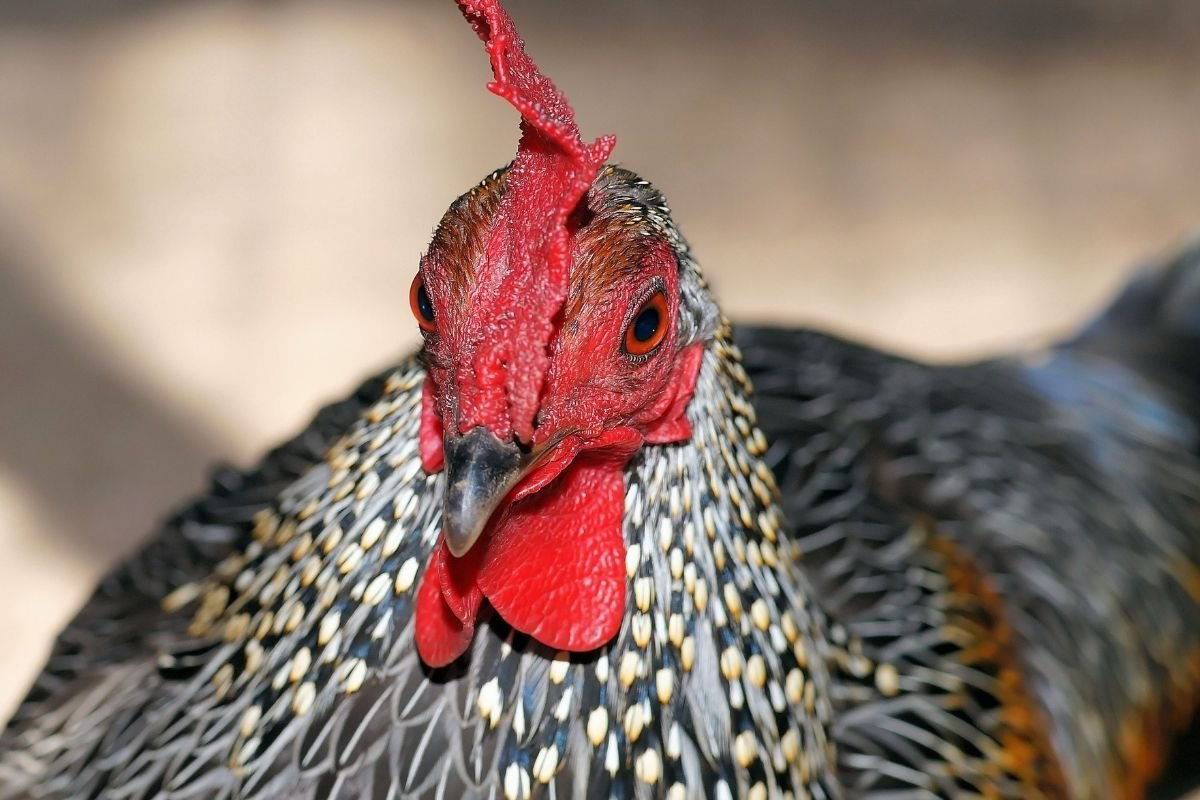
Gallo pinto translates literally as “spotted rooster” — a reference to the speckled appearance of white rice mixed with dark black beans, which was said to resemble the mottled feathers of a pinto rooster.
The name is first documented in Costa Rican written sources in the 1930s, though the dish it describes almost certainly predates this documentation by decades. The naming of a dish does not always follow immediately behind the eating of it — particularly in the rural, predominantly oral food culture of 19th-century Central America, where what a farming family called their breakfast was not the subject of culinary documentation.
Nicaragua also uses the name gallo pinto for its version of the dish — though with important differences that are the subject of considerable national feeling on both sides. The Nicaraguan version typically uses small red beans rather than black beans, and the seasoning profile differs from the Costa Rican version in ways that are subtle to outsiders and decisive to anyone who grew up eating one or the other.
The question of which country’s version is the “original” gallo pinto has been debated with the kind of intensity that suggests neither side will accept any resolution that does not favor them. Nicaraguan food historians point to documentation they argue predates Costa Rican references. Costa Rican food historians counter with their own evidence. Food anthropologists note, correctly, that both countries are describing variations on a dish that belongs to neither of them exclusively — that both are regional expressions of a much older culinary tradition with roots that go back well before either nation existed as a political entity.
At El Patio, we serve the Costa Rican version. We are biased and we own it.
The Plot Twist: Salsa Lizano
Here is where the history of gallo pinto becomes specifically and irreducibly Costa Rican.
In 1920, a company called Lizano — founded in San José in the late 19th century — introduced a new condiment to the Costa Rican market. Salsa Lizano was a brown, pourable sauce with a flavor unlike anything else available in the Central American pantry: tangy and faintly sweet, with a subtle warmth from spices, a savory depth that anchored the other flavors, and a mild complexity that somehow made everything it touched taste more like itself, only more so.
Salsa Lizano was modeled loosely on the Worcestershire sauces that British companies had been producing since the early 19th century, but adapted to Costa Rican tastes and ingredients in ways that produced something with its own distinct identity. It is sweeter and less sharp than Worcestershire, with less fermented anchovy character and more vegetable and spice presence.
What Salsa Lizano did to gallo pinto cannot be overstated. Before it, the dish was rice and beans — nutritious, satisfying, culturally central, and, in the hands of a skilled cook, genuinely delicious. With Salsa Lizano added during the cooking — sizzled into the pan with the aromatics before the rice and beans go in, coating everything with its distinctive caramel-savory-tangy depth — gallo pinto became something else entirely. Something that tasted like Costa Rica. Something that, once you had grown up eating it, you could not imagine breakfast without.
The adoption of Salsa Lizano as the definitive gallo pinto ingredient happened gradually across the 1920s and 1930s and was essentially complete by the mid-20th century. The condiment is so embedded in the national dish that many Costa Ricans, asked what makes gallo pinto Costa Rican rather than Nicaraguan, will simply say: “Salsa Lizano.” They are not wrong. It is the ingredient that transformed a regional dish into a national identity.
Today, Salsa Lizano is owned by Unilever — an acquisition that causes a degree of cultural discomfort for some Costa Ricans, though the sauce itself has not changed — and is the best-selling condiment in Costa Rica by a considerable margin. Bottles of it are among the most common items in the luggage of Costa Ricans returning from abroad. It is irreplaceable, and everyone knows it.
What Gallo Pinto Means: Food as National Identity
Food becomes a national dish when it is eaten by enough people, often enough, in enough different contexts, that it begins to carry the weight of shared identity rather than simply shared nutrition. Gallo pinto achieved this status in Costa Rica gradually and then, in the way of these things, all at once.
By the mid-20th century, gallo pinto was the breakfast of Costa Rica — not just of the rural farming communities where it had developed, but of the urban middle class, the professional households, the families in San José’s expanding suburbs who were in every other way distancing themselves from the agricultural life of their recent ancestors. The dish crossed class lines in a way that few foods do — equally at home on the table of a coffee farmer in Tarrazú and in a city kitchen preparing children for school.
This ubiquity is significant. A national dish that is eaten only by one segment of the population is really a regional or class dish with a national label. Gallo pinto is genuinely national — it is eaten at every economic level, in every region, at every age. Surveys of Costa Rican food preferences consistently find it ranking first or second among “most loved” and “most missed when abroad” dishes, alongside the casado that typically features gallo pinto as a component.
The emotional resonance is also real and worth taking seriously. Ask any Costa Rican who has spent significant time abroad what they miss most about home, and a large proportion will mention gallo pinto within the first three responses. Not because it is the most technically sophisticated dish in the national repertoire — it is not — but because it is the dish that tastes like morning, like home, like the specific sensory experience of being Costa Rican in a way that nothing else replicates.
This is what food does when it is eaten daily across generations: it becomes the taste of belonging.
The Anatomy of a Perfect Gallo Pinto
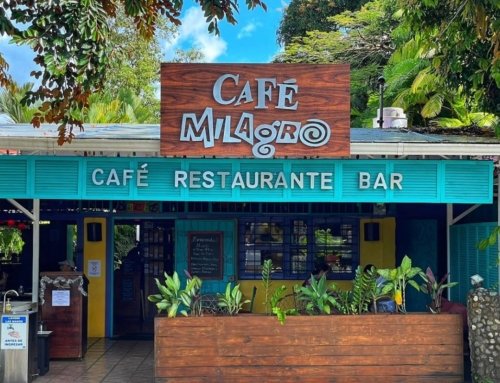
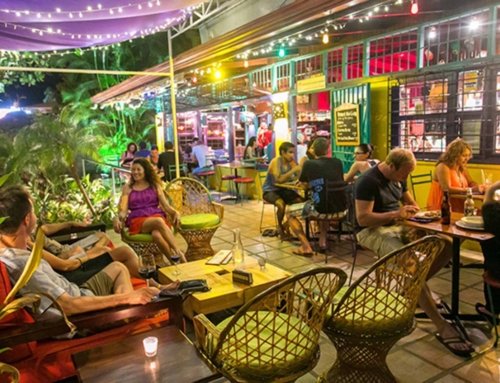
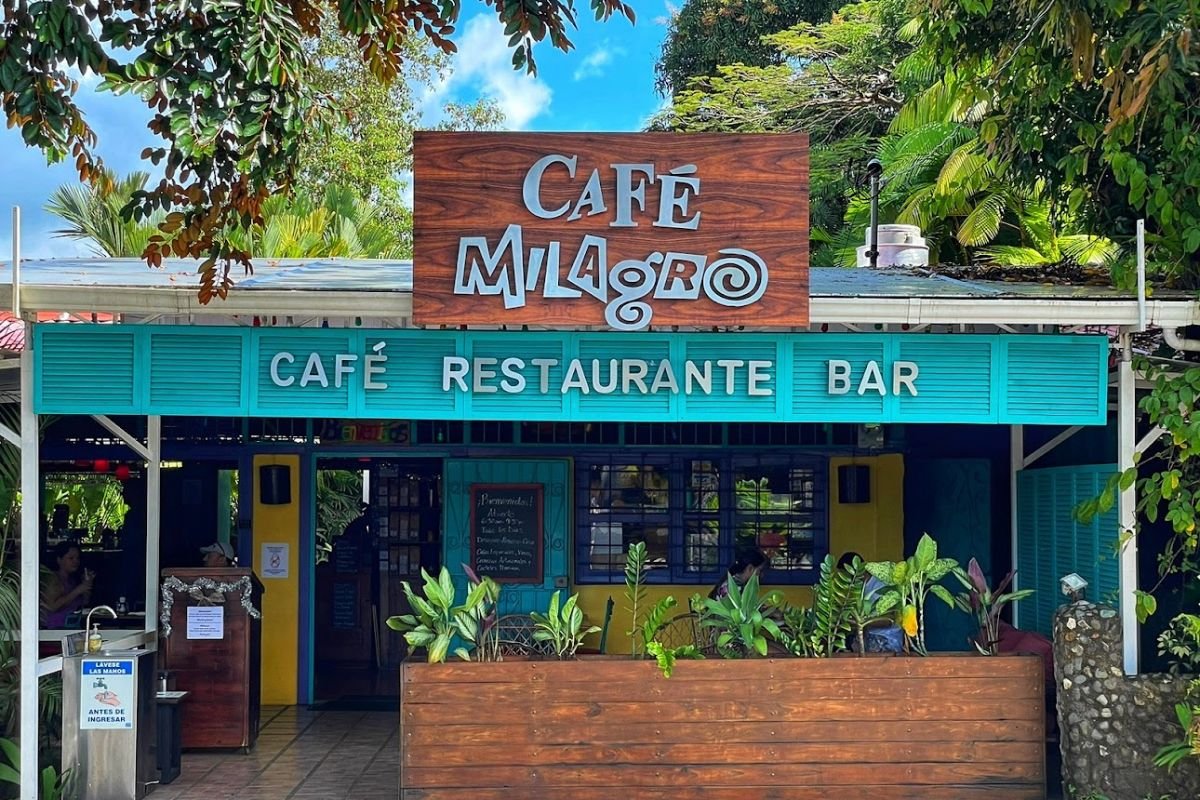
Given thirty years of making it at El Patio de Cafe Milagro, we have some opinions about what separates an extraordinary gallo pinto from an ordinary one. The ingredients are simple. The execution is not difficult. The gap between good and great is entirely in the details.
The rice must be day-old. Freshly cooked rice is too moist and soft — it will turn to mush when cooked with the beans and aromatics. Rice that has been cooked the day before and refrigerated overnight has dried slightly and firmed, so it holds its grain structure through the second cooking. This is not a corner-cutting technique. It is the correct technique, and the reason that gallo pinto has historically been a breakfast dish rather than a dinner one — it uses the rice left from the night before.
The beans must be well-cooked and properly seasoned. Black beans simmered slowly with garlic, culantro, sweet pepper, and onion until they are tender and their cooking liquid is slightly thickened produce a completely different gallo pinto than beans from a can rinsed and added cold. The bean liquid — the slightly viscous, deeply flavored liquid that results from long, slow cooking — is as important as the beans themselves. It is what coats the rice when the two are cooked together.
The aromatics go first. Onion, sweet pepper, garlic, and culantro cooked in oil until soft and fragrant before any rice or beans enter the pan is the flavor foundation. Rush this step and you will notice.
Salsa Lizano is not optional. It is the dish. Add it generously while the aromatics are cooking so that it caramelizes slightly in the heat before the rice and beans go in.
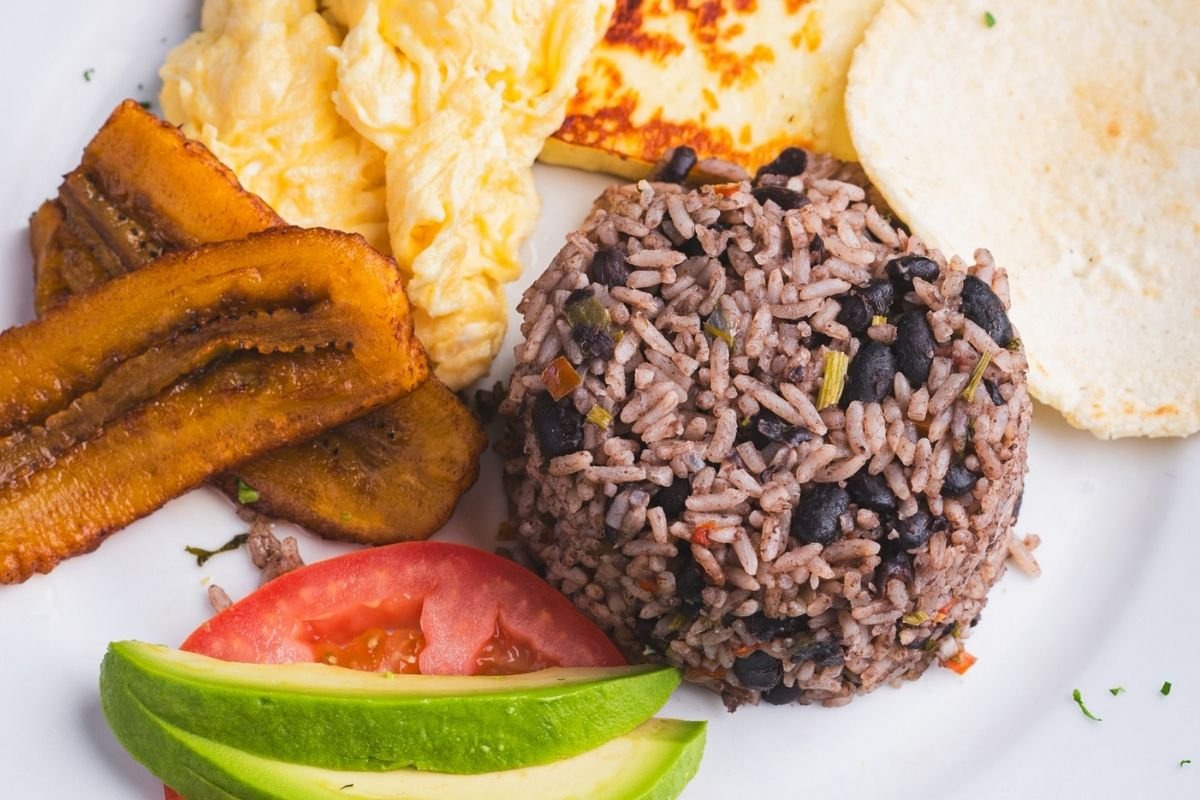
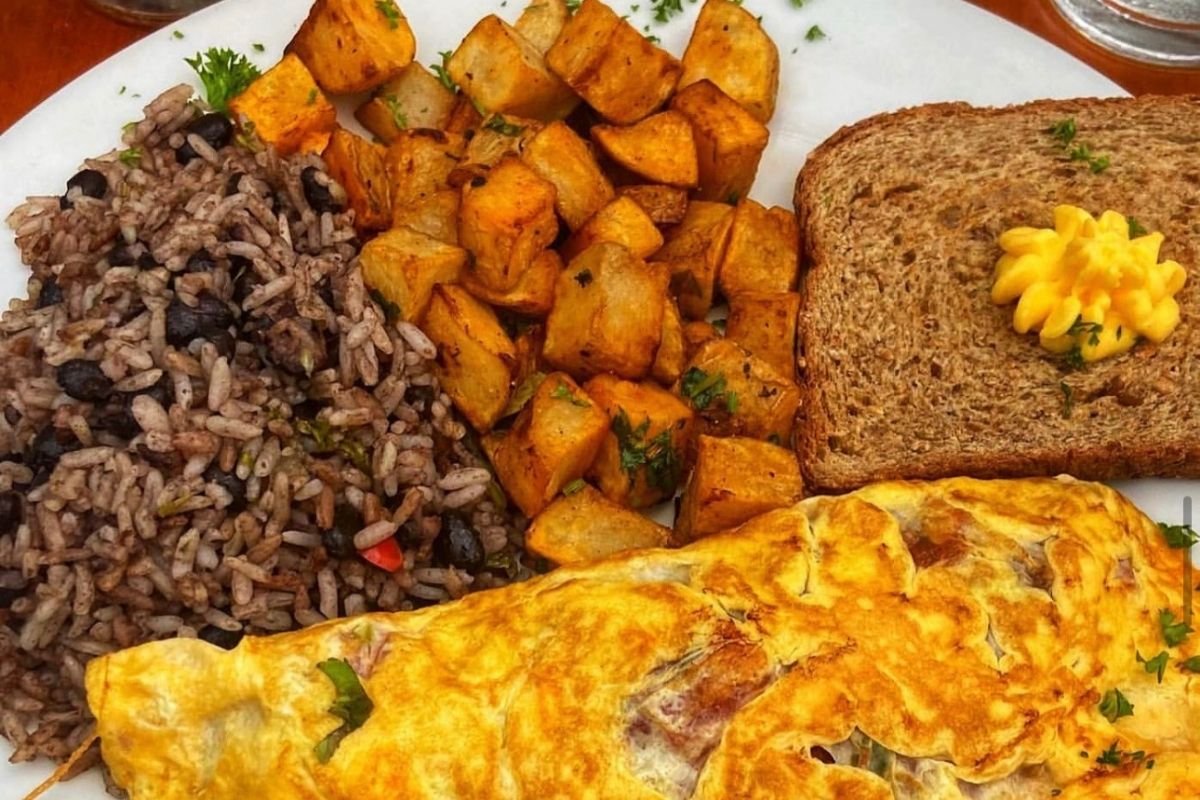
High heat, brief cooking. Once the rice and beans meet the aromatics in the pan, the goal is integration and the development of slight texture — not slow braising. A hot pan, a few minutes of cooking with regular movement, and the dish is done. Overcooking produces something soggy and gray. The properly made version is fragrant, slightly crisp at the edges, and vibrantly colored — the speckled pinto pattern that gave the dish its name vivid and distinct rather than muddied together.
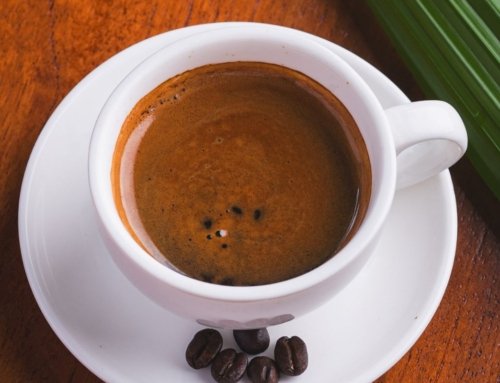
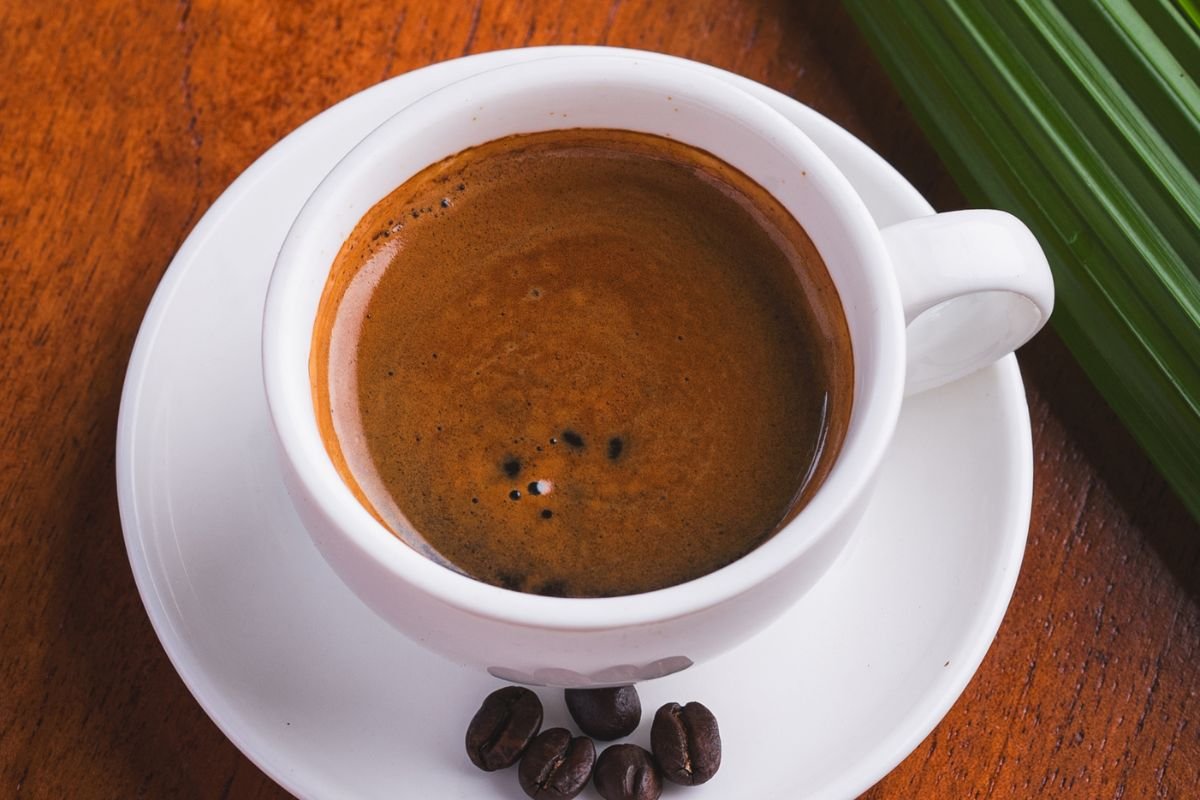
Serve immediately. Gallo pinto waits for no one. It is a breakfast dish in the fullest sense — made fresh, eaten at the table, accompanied by eggs (scrambled or fried), fresh white cheese (queso fresco or natilla), sweet ripe plantains, and a cup of café con leche or café chino from Cafe Milagro’s Quepos roastery.
This is the breakfast Costa Rica invented. And we have not found a better one.
Thirty Years of Gallo Pinto at El Patio
El Patio de Cafe Milagro has been serving gallo pinto since 1994 — and in thirty years, the recipe has not changed in its essentials. We use local black beans. We use day-old rice. We use Salsa Lizano. We cook the aromatics properly. We serve it immediately, with fresh accompaniments, alongside coffee from our Quepos roastery.
What has changed over thirty years is the depth of our appreciation for what the dish actually is. When you serve something every morning for three decades, to guests from every country in the world, many of whom have never encountered it before, you become acutely aware of what it does in the room. The Costa Rican guests who have been eating it since childhood recognize it immediately — their posture changes slightly when the plate arrives. The international visitors who try it for the first time look uncertain for a moment, then surprised, then pleased in the specific way of someone who has discovered that something simple is better than they expected.
Both responses are correct. Gallo pinto is familiar and surprising simultaneously — a dish that has been eaten a thousand times and still delivers.
This is what a national dish does when it is made well. It makes everyone at the table feel, briefly and genuinely, at home.